The evolution of homes and workplaces across India signals a massive shift in how we view and use our built environments. From integrated technology and sustainable materials to flexible work-from-home zones and wellness-centric interiors, the future of living spaces is being reshaped by emerging trends and rising expectations. Against this backdrop, advanced education in interior design has become essential, not just for aesthetics but for creating spaces that are functional, sustainable, and enriching.
In Jaipur, Rajasthan, ARCH College of Design & Business stands out as an institute that prepares designers to lead this transformation. With industry-focused programmers, global collaborations, and a curriculum that aligns with evolving market needs, ARCH is an important choice for students considering Interior Design Courses After 12th and beyond.
The Growing Importance of Interior Design in India
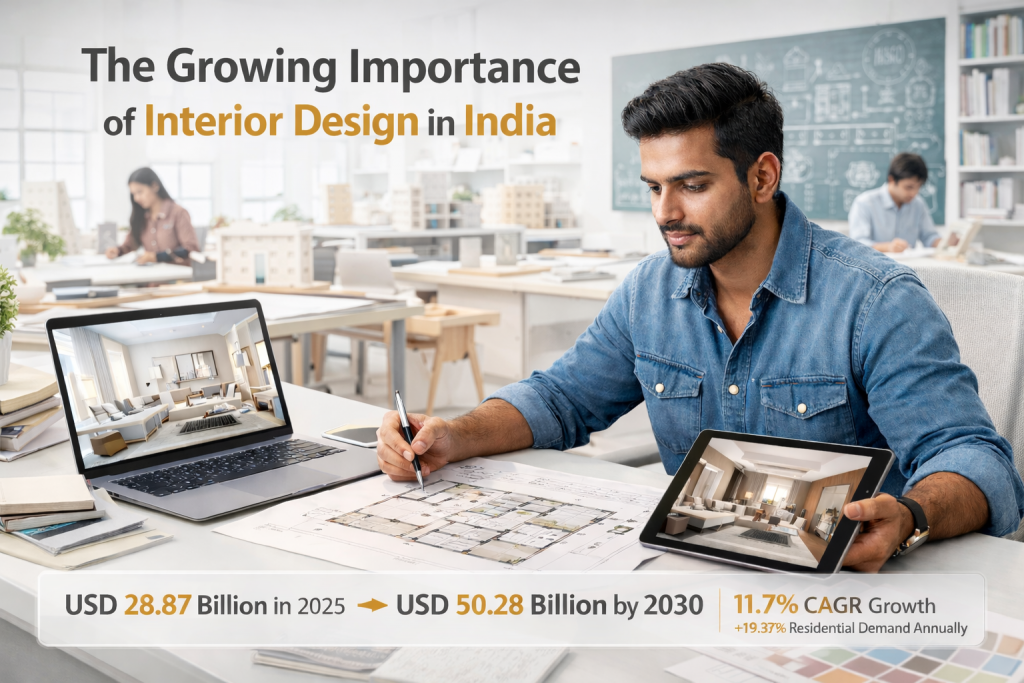
India’s interior design industry is booming. Recent data shows the market was valued at approximately USD 28.87 billion in 2025 and is projected to grow to USD 50.28 billion by 2030, expanding at an 11.7% CAGR. This rapid growth reflects rising demand for well-designed residential and commercial spaces that are both functional and expressive of personal lifestyles.
Residential interiors are one of the fastest-expanding segments, with demand increasing around 19.37% annually. Designers skilled in creating dynamic, adaptable interiors are now more crucial than ever.
Such metrics highlight that the future of living spaces is not just visually creative but structurally, technologically, and socially complex — requiring advanced knowledge and practical experience through structured academic programs.
ARCH’s Master’s Program: Shaping the Designers of Tomorrow
ARCH’s master’s program in Interior Design offers postgraduate education that fosters holistic learning and innovation. The program goes well beyond traditional art or design storytelling, focusing instead on real-world problem solving, spatial strategies, material science, and sustainability — skills essential for shaping the future of living spaces.
At ARCH, students engage in design studios, research projects, and experiential assignments that mimic professional scenarios. The curriculum integrates contemporary topics such as adaptive reuse, smart spaces, eco-friendly material application, and human-centric design — giving learners the tools to become leaders in the interior design profession.
Key Metrics and Industry Insights
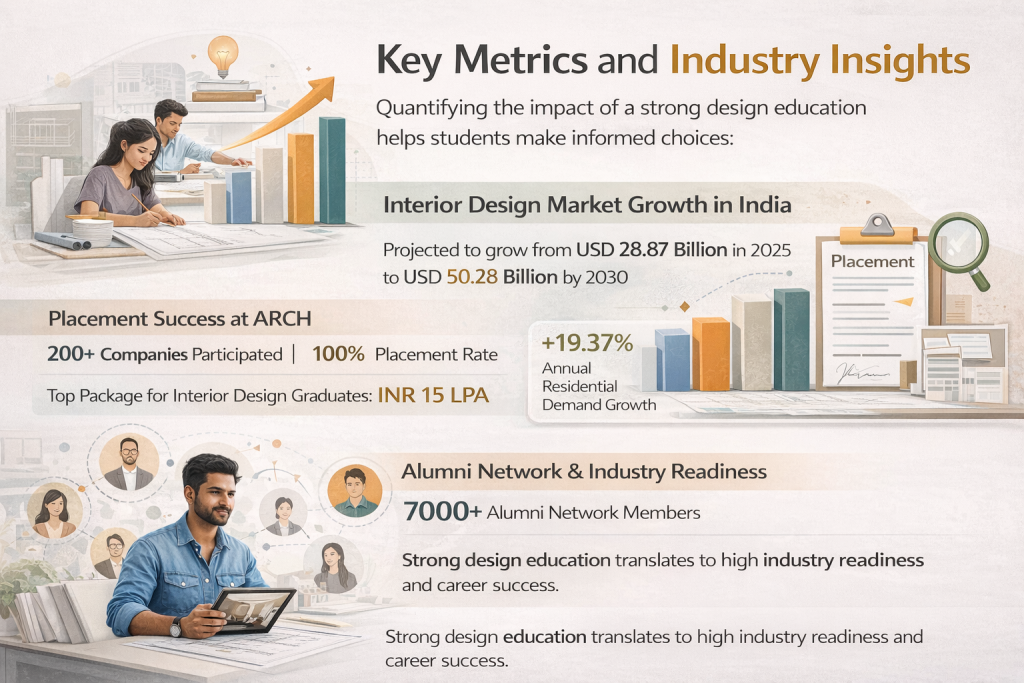
Quantifying the impact of a strong design education helps students make informed choices:
Interior Design Market Growth in India
- India’s interior design market is projected to expand rapidly in the next decade, demonstrating a growing need for trained professionals.
- Residential interiors are contributing significantly to this expansion, with search interest and investment accelerating year-on-year.
Placement Success at ARCH
- In the recent placement cycle, over 200 companies participated in ARCH’s campus recruitment activities, offering opportunities across design, fashion, interior, and other creative disciplines. 100% placement was achieved in the last reported session.
- For interior design graduates specifically, the highest placement package recorded was around INR 15 LPA.
Alumni Network and Industry Readiness
- Over 7000+ professionals are part of ARCH’s alumni community, working across design, business, research, and entrepreneurship domains.
These figures show that students completing ARCH’s programmers not only gain strong design foundations but also enter a vibrant market primed for growth. This combination is key to tackling the future of living spaces — a landscape where demand for design excellence continues to rise.
Curriculum that Matches Market Needs
ARCH’s postgraduate coursework is devised to respond to real industry expectations. Subjects include spatial psychology, advanced detailing, smart building systems, sustainable material technologies, and user-experience design. The hands-on studio approach encourages students to test ideas, build portfolios, and collaborate with partners — preparing them for professional studio roles and entrepreneurial ventures.
The curriculum is continually updated through industry collaborations and global exchange programmes. Partnerships with organisations like the British Council-supported UKIERI Project and other research alliances ensure that learning stays relevant to both Indian and international contexts.
Career Pathways and Industry Demand
ARCH graduates are well-positioned for roles that define the future of living spaces. Career options range from residential and commercial interior designer to spatial planner, sustainable design consultant, and design entrepreneur. With specialization and experience, professionals can command higher responsibilities, lead multidisciplinary teams, or even start their own design studios.
Given the expanding market and India’s rising investments in real estate, urban development, retail environments, and hospitality spaces, talented interior designers remain in high demand.
Choosing the Right Path: ARCH and Other Options
For students weighing their choices, understanding where ARCH stands among top interior design colleges in India helps inform decisions. ARCH’s reputation for experiential learning, strong placement statistics, and industry interactions often places it among top outcomes for interior design education. Moreover, it complements traditional routes like Bachelor’s studies in design or more niche pathways explored in best colleges for interior design rankings.
Whether you are aspiring for interior design courses after 12th or considering postgraduate expertise, ARCH offers a platform to build skills that matter for the evolving world of design.
Conclusion: Preparing for the Future of Living Spaces
The landscape of interior design is expanding with new possibilities, driven by technology, sustainability, and lifestyle shifts. As the industry grows, academic programs that blend theory, practice, and real-world exposure — like ARCH’s Master’s Program — become critical for shaping future innovators. For students in Jaipur, Rajasthan and beyond, this programs not only opens doors to creative careers but also prepares them to contribute meaningfully to the future of living spaces — making interiors not just beautiful, but purposeful, resilient, and responsive to the needs of tomorrow.