
Design is entering a new phase where creativity blends with intelligent technology. Artificial Intelligence is no longer limited to tech companies—it is now part of how garments are made, how rooms are planned, and how products are developed. Today, nearly 70% of global design-led companies report using AI tools in some part of their creative or production workflow, showing how rapidly the shift is taking place. For many designers, AI has become a collaborator that supports faster decision-making, cleaner workflows, and more meaningful outcomes. This shift is visible across fashion, interiors, and product design, opening new possibilities for students, professionals, and industries.
Although AI is advancing quickly, it is not replacing designers. Instead, it strengthens their work—saving time, reducing waste, and improving user experiences. With global interest in smart tools and efficient production growing every year, AI’s impact on design continues to expand.
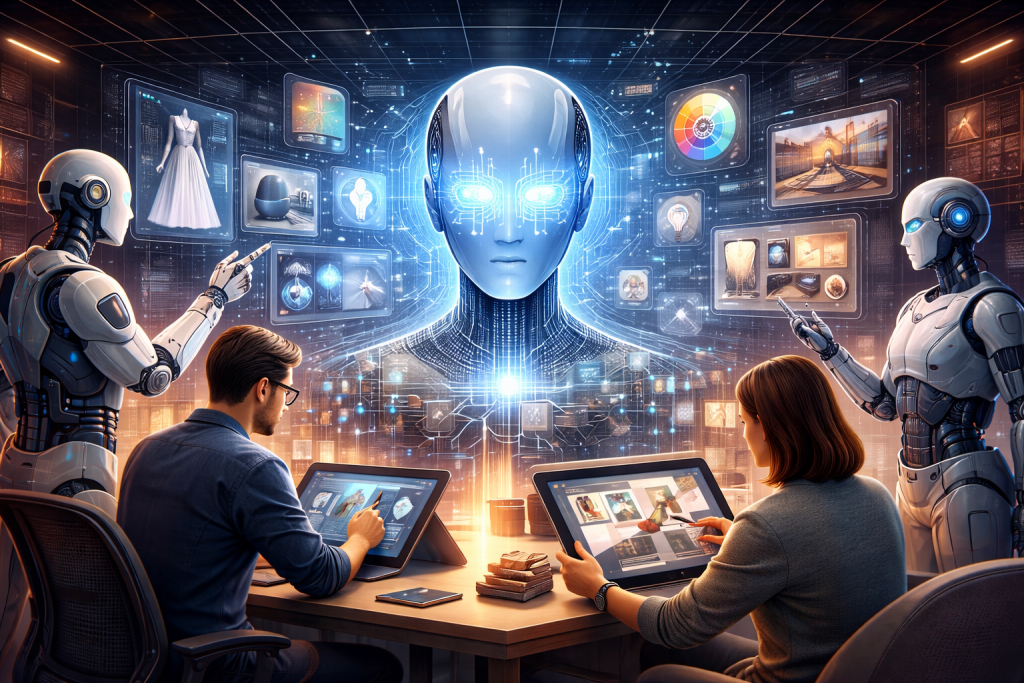
Why AI Matters in Creative Fields
Designers work with imagination, materials, users, and function. AI cannot replace human sensitivity, but it can analyse data, automate repetitive tasks, and generate variations. This frees designers to focus on concepts and storytelling.
Key benefits include:
- Faster prototyping and corrections
- Lower production and sampling costs
- Better decision-making through insights
- Reduced waste through accurate planning
- Wider access to digital tools for young designers
From global brands to small studios, the results are visible everywhere.
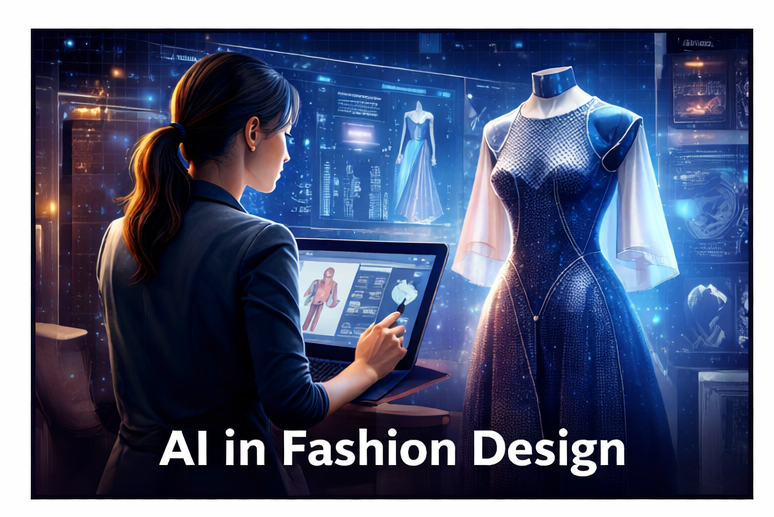
AI in Fashion Design
Fashion moves quickly, and AI supports designers at every stage.
Trend Research and Insights: Tools like Heuritech scan thousands of online images daily to identify rising colours, shapes, and styles. Instead of long manual research, designers receive clear trend summaries to support collection planning.
Virtual Sampling and Prototyping: CLO 3D—used by brands such as Adidas, Zara, Hugo Boss, and Macy’s—creates realistic digital garments, reducing physical samples and saving materials. Students also use it to present more polished work.
Personalisation in Retail: Brands like Nike and Zara use AI systems to recommend products based on browsing behaviour. Nike’s AI assistant helps customers find the right footwear and apparel through personalised suggestions.
Sustainable Fashion: AI improves demand forecasting and material planning, helping brands avoid overproduction and support more responsible supply chains.
AI in Interior Design
Interior designers now experiment with layouts, materials, and lighting in minutes rather than days.
Layout Suggestions: AI-powered tools generate instant layout options from room measurements, helping designers start projects faster.
Visuals and Moodboards: AI creates photorealistic renders and moodboards quickly, supporting colour, texture, and lighting exploration.
User Personalisation: IKEA’s AI tool “IKEA Kreativ” lets users scan their rooms, remove existing furniture, and redesign spaces in 3D—making visualisation much easier.
AI and Smart Homes: The global smart home market is projected to reach hundreds of billions by 2030, with devices such as intelligent lighting, climate systems, and home assistants becoming part of modern interior planning.

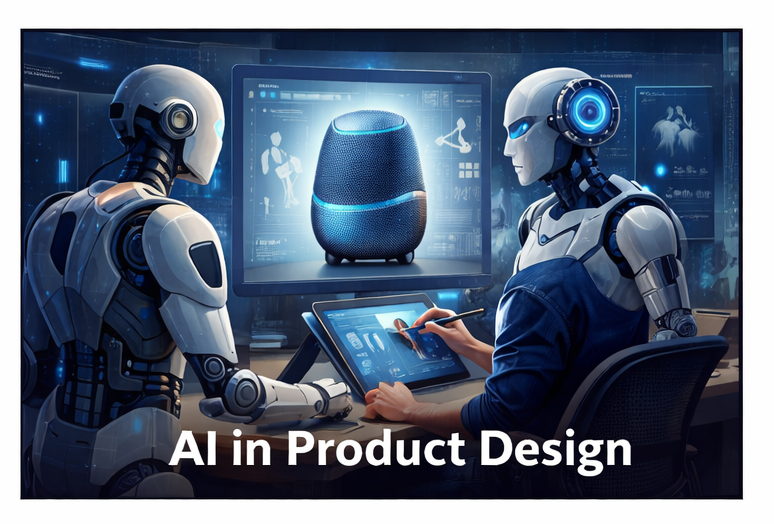
AI in Product Design
Product design relies on performance, usability, and innovation—and AI supports all three.
Generative Design: AI generates multiple design variations based on strength, weight, and material goals. This is used in automotive components, furniture, and sports gear.
Simulation and Testing: AI simulates stress, movement, and real-world use to reduce physical prototypes and speed up development.
User-Centred Design: AI studies user behaviour and feedback, helping create products that are more functional and comfortable.
Industry Example: Adidas: Adidas’ Futurecraft 4D midsole was developed using data-driven design and AI analysis to optimise cushioning and performance.
Skills Designers Now Need
As AI becomes a standard tool, designers need:
- Comfort with digital and AI tools
- Ability to work with generative systems
- Ethical and critical thinking
- Creativity that adds emotional depth
- Cross-disciplinary awareness
Future designers will blend imagination with intelligent tools.
Challenges and Considerations
AI also brings important questions:
- How to maintain originality
- Avoiding over-dependence on automated suggestions
- Ensuring data is unbiased
- Understanding intellectual property rights
- Keeping the human touch in design
Awareness of these issues helps designers use AI responsibly.
Conclusion
AI is now part of design in simple, practical, and powerful ways—from virtual sampling and layout ideas to user insights and performance testing. Designers still lead with creativity and emotion, while AI supports them by reducing repetitive tasks and speeding up production. The future belongs to designers who combine imagination with intelligent tools to build thoughtful and responsible solutions in fashion, interiors, and product design.
At ARCH College of Design & Business, this future-ready approach aligns with our design pedagogy that balances technical studies, contextual understanding, and globally aligned learning. By integrating emerging tools with deep creative thinking, ARCH prepares students to become designers who are both innovative and industry-ready.