A new year often brings new questions—especially for students standing at the crossroads of career decisions. As 2026 begins, a visible shift is happening across India. Students are no longer choosing degrees simply because they are familiar or conventional. Instead, they are looking for education that prepares them for the real world, evolving industries, and meaningful careers. This shift is one of the biggest reasons why design careers are flourishing—and why thousands of students are choosing ARCH College of Design & Business over traditional degrees.
Why Traditional Degrees Are No Longer Enough
For decades, traditional degrees have followed a similar structure: theory-heavy learning, fixed syllabi, and limited real-world exposure. While they provide academic knowledge, many students find themselves unprepared for industry expectations once they graduate. The gap between what is taught in classrooms and what is required in professional environments continues to grow.

Most traditional programs focus on memorisation rather than application. Problem-solving, collaboration, adaptability, and creative thinking—skills that industries now demand—are often treated as add-ons rather than core learning outcomes. As industries evolve faster than curricula, students are increasingly questioning whether conventional degrees alone can truly prepare them for the future.
Why Design Careers Are Thriving in 2026
Design is no longer limited to aesthetics. In 2026, design is about understanding people, systems, and contexts—and creating thoughtful solutions. From products and spaces to digital experiences and services, design thinking is shaping businesses, technology, and society at large.
Design careers thrive because they focus on solving real problems. Designers observe life, question existing systems, and create better possibilities. In many ways, design is life happening around us—shaped intentionally. This human-centred, impact-driven approach is exactly what modern industries are looking for, making design one of the most relevant career paths today.
ARCH College: 25 Years of Design Education Excellence
ARCH College of Design & Business brings with it 25 years of experience in shaping design professionals. This legacy is built not just on years, but on consistent evolution with industry and society. With a strong alumni network of over 7,500 students, ARCH reflects a learning ecosystem rooted in practice, mentorship, and real-world exposure.
Unlike institutions that follow rigid academic models, ARCH has continuously adapted its approach to design education—ensuring that students are not only skilled but also confident, aware, and industry-ready.

How ARCH Makes Students Future & Industry Ready
What sets ARCH apart from traditional degrees is its focus on preparing students for life beyond classrooms. Design education at ARCH integrates skills, knowledge, understanding, and design thinking into everyday learning. Students are encouraged to think, question, experiment, and apply—not just study.
Here, education is not about chasing marks, but about building a mindset. A mindset that enables students to navigate uncertainty, collaborate with others, and respond creatively to real-world challenges—qualities essential for long-term career growth.

Global Design Pedagogy at ARCH
In a connected world, design cannot exist in isolation. ARCH follows a global design pedagogy that exposes students to international perspectives, methodologies, and standards. This global outlook helps students understand how design functions across cultures, markets, and industries—while staying grounded in local contexts.
Such exposure prepares students to think beyond borders and adapt to global professional environments, something traditional degrees often fail to address.
Industry-Relevant Learning, Not Just Theory
One of the strongest contrasts between ARCH and traditional degrees lies in how learning happens. At ARCH, education is project-based and experiential. Students engage in real-life briefs, research-driven projects, and hands-on problem-solving.
This approach builds conversant thinking—the ability to articulate ideas, defend decisions, and adapt concepts based on feedback. Learning becomes active, not passive, and students graduate with experience, not just certificates.
Interdisciplinary & Multidisciplinary Design Education
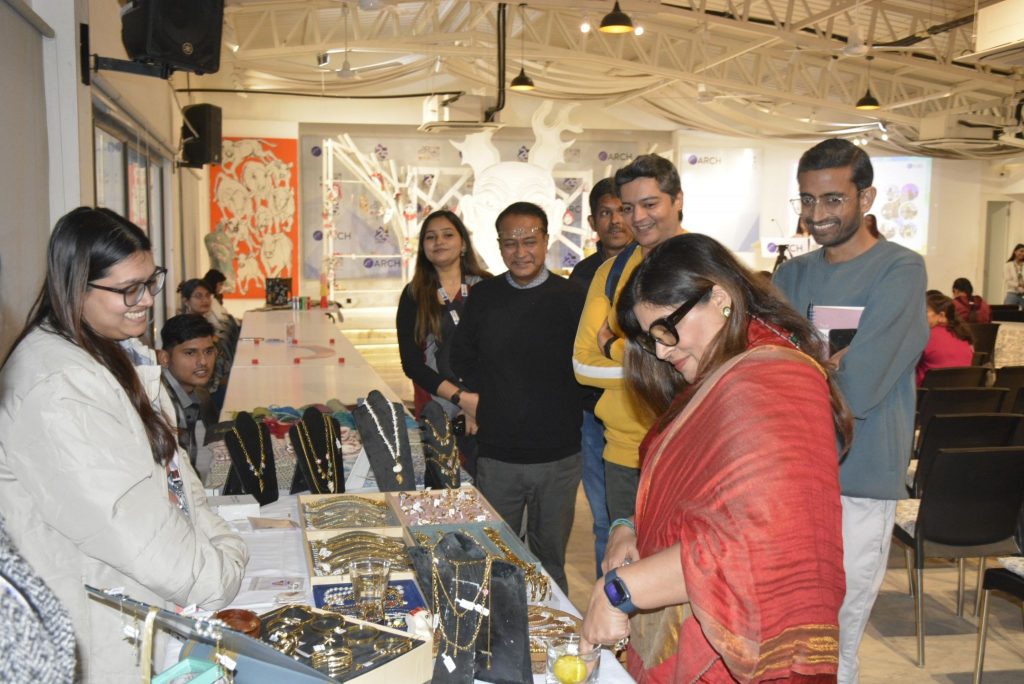
Industries today rarely work in silos, and neither does design education at ARCH. Students learn through interdisciplinary and multidisciplinary exposure, collaborating across design domains such as fashion, product, interior, jewellery, and digital design.
This collaborative mindset helps students understand how different disciplines intersect, preparing them for complex, real-world projects where teamwork and cross-functional thinking are essential.

The Core Structure of Design Education at ARCH
Design education at ARCH is built on three essential pillars:
Design Studies focus on defining problem statements and developing conceptual clarity. Students learn how to think before they create.
Contextual Studies emphasise people-centric design through primary and secondary research, understanding scenarios, behaviours, and environments.
Technical Studies cover materials, systems, processes, tools, and digital studies—ensuring students can translate ideas into practical outcomes.
Together, these pillars ensure a balanced approach to thinking, understanding, and making.

Beyond Academics: Building Design Professionals
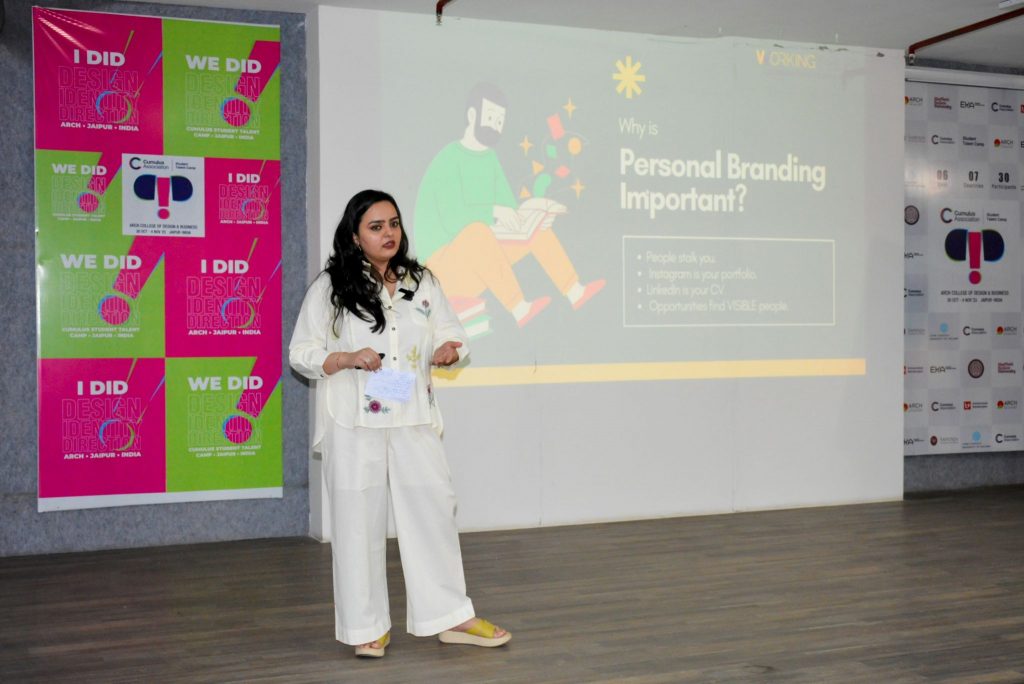
Design education at ARCH goes beyond curriculum. Students engage in impact studies to understand the consequences of design decisions, especially for high-precision and responsible work. Professional skills—communication, collaboration, and application—are learned and applied continuously.
Conceptual designing becomes a habit, not a phase, enabling students to evolve with changing industries.
The ARCH Advantage in 2026
As students step into 2026, career choices are becoming more intentional. Traditional degrees may offer familiarity, but design education at ARCH offers relevance. With 25 years of experience, a strong alumni network, global pedagogy, and industry-driven learning, ARCH prepares students not just for jobs—but for meaningful design careers.
This is why thousands of Indian students are choosing ARCH —because the future belongs to those who can think, create, and design with purpose.