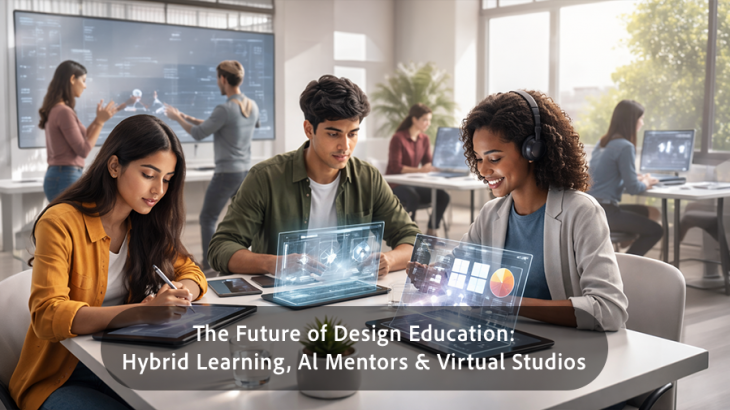
The future of design education is being shaped by rapid technological shifts, evolving industry expectations, and the need for globally relevant creative skills. Traditional classroom models are no longer sufficient on their own. Design education is moving towards a more flexible, technology-enabled, and industry-integrated ecosystem—especially in India’s growing creative economy.
Institutions offering professional design programmes are now rethinking how students learn, collaborate, and prepare for real-world careers. This transformation is particularly visible in emerging design hubs such as Jaipur, Rajasthan, where education blends heritage, innovation, and global exposure.
Why the Future of Design Education Is Changing
The global design industry is projected to grow at over 8% CAGR through 2030, driven by demand in UX design, interior spaces, fashion innovation, and visual communication. In India alone, the creative economy contributes significantly to employment, with design roles expanding across digital platforms, retail, real estate, and technology sectors.
To meet these demands, the future of design education must move beyond static syllabi. Today’s learners need exposure to digital tools, interdisciplinary thinking, and continuous skill upgrades—something modern design institutions are actively incorporating.
Hybrid Learning: Redefining How Designers Learn
One of the most significant shifts in the future of design education is the adoption of hybrid learning models. This approach combines physical studio practice with digital instruction, allowing students to learn both conceptually and experientially.
Hybrid Learning enables:
- On-campus workshops, material labs, and hands-on studio work
- Online lectures, recorded modules, and global expert sessions
- Flexible access to learning resources without compromising mentorship
For students exploring design programmes at institutions recognized among the best design colleges in India, this blended structure ensures continuity, accessibility, and deeper engagement with evolving design practices.
AI Mentors and Personalised Design Learning
Artificial intelligence is no longer limited to automation—it is becoming a learning companion. AI-powered tools now assist students in ideation, visualisation, trend forecasting, and iterative design development.
In the future of design education, AI mentors help:
- Provide instant feedback on design drafts
- Analyse user behaviour and market trends
- Support personalised learning paths based on student performance
This shift enhances creativity rather than replacing it. Design colleges, particularly those ranked among the top design colleges in India, are integrating AI tools to ensure students stay competitive in tech-driven creative industries.
Virtual Studios and Global Collaboration
Virtual studios are redefining how students collaborate and present work. Through immersive digital environments, learners can work on live projects, participate in international critiques, and simulate professional design workflows.
This innovation in the future of design education allows:
- Cross-border collaboration with peers and faculty
- Real-time portfolio reviews and exhibitions
- Exposure to global design standards and practices
For students studying at institutions considered among the best design colleges in Jaipur, virtual studios bridge geographical gaps while maintaining strong academic mentorship on campus.
Market Trends Shaping Design Education in India
Current market indicators show:
- Over 65% of design employers prefer candidates with digital and hybrid skillsets
- Demand for UX/UI designers has grown by more than 30% in the last three years
- Interior and fashion design roles increasingly require technology integration
These trends highlight why the future of design education must be aligned with industry needs. Colleges offering specialized programmes, including those recognized as best graphic design colleges in India, are updating curricula to include AI tools, sustainability practices, and digital workflows.
Discipline-Specific Evolution in Design Programmes
Each design discipline is evolving uniquely:
- Interior design education now integrates smart materials and spatial technology, influencing institutions listed among the top interior design colleges in India
- Fashion education emphasises digital pattern making and sustainable sourcing, shaping curricula at the top fashion design colleges in India
- Visual communication programmes focus on user experience, branding strategy, and interactive media
This diversification ensures students graduate with skills relevant to their chosen field.
Preparing Students for the Future Creative Economy
The future of design education is not just about technology—it is about mindset. Critical thinking, cultural awareness, entrepreneurship, and adaptability are becoming core learning outcomes.
Design institutions rooted in creative cities like Jaipur are uniquely positioned to offer this balance. By combining cultural context, industry exposure, and global learning models, they prepare students for leadership roles in the design economy.
Conclusion
The future of design education is dynamic, technology-driven, and learner-centric. Hybrid Learning, AI mentors, and virtual studios are no longer optional—they are essential components of modern design pedagogy. As the creative industry continues to evolve, students must choose institutions that align education with real-world innovation, industry relevance, and global standards.