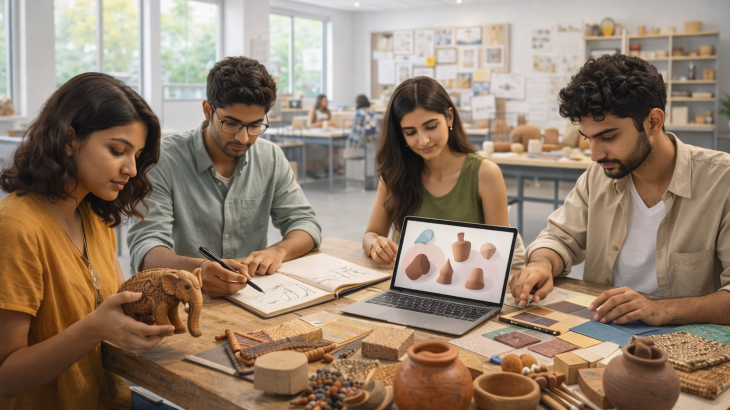
India’s handicraft heritage is one of the richest in the world, rooted in centuries-old traditions, regional craftsmanship, and cultural storytelling. From block printing in Rajasthan to metalwork in central India, these art forms once thrived through royal patronage and community-based production. Today, a new generation of designers is playing a crucial role in the revival of Indian handicrafts, blending tradition with innovation to make these crafts relevant in contemporary markets.
Cultural and Economic Significance of Indian Handicrafts
Indian handicrafts are not only cultural assets but also a major contributor to employment. According to government estimates, the handicrafts sector employs over 7 million artisans, many of whom belong to rural and semi-urban communities. Rajasthan alone supports thousands of craft clusters, making cities like Jaipur vital centers of traditional production. This economic relevance has made the revival of Indian handicrafts a priority for designers focused on sustainability and inclusive growth.
Why Traditional Crafts Faced Decline
Despite their value, traditional crafts experienced reduced demand due to mass manufacturing and changing lifestyle preferences. Younger consumers began favoring machine-made products, while artisans struggled with limited market access. However, shifting consumer behavior toward ethical consumption and handmade products has created new opportunities. This change has encouraged designers to focus on modernizing traditional art without compromising authenticity.
Young Designers as Change-Makers
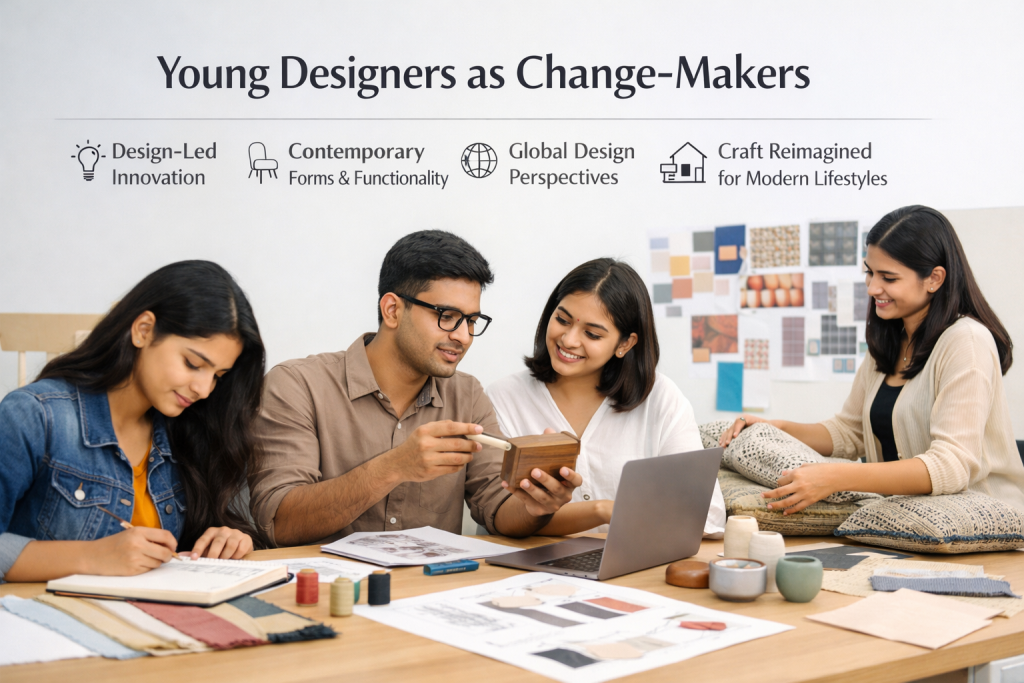
A new generation of designers is reshaping the craft ecosystem by blending tradition with contemporary design thinking. Instead of replicating conventional patterns, they experiment with modern forms, functional applications, and global aesthetics. Handcrafted textiles are now used in minimalistic apparel, while traditional motifs appear in contemporary interiors and lifestyle products. This approach supports the revival of Indian handicrafts by making them relevant to today’s design-conscious audience.
Role of Design Education in Craft Integration
Design education plays a crucial role in connecting artisans with modern markets. Many product design colleges in India now include craft-based research, field immersion, and artisan collaboration in their curriculum. Jaipur-based institutions, in particular, offer students direct access to regional crafts, enabling them to understand materials, production methods, and cultural context at the grassroots level.
Fashion Design and Craft-Based Sustainability
Fashion designers have been instrumental in reviving handcrafted textiles. Graduates from top fashion design colleges in India increasingly adopt slow fashion principles, emphasizing handloom fabrics, natural dyes, and traditional embroidery. Industry reports indicate that demand for sustainable and handcrafted fashion products has grown steadily over the past five years, reinforcing the revival of Indian handicrafts through responsible design practices.
Product Design Innovation Rooted in Tradition
Beyond fashion, product design has expanded the scope of craft applications. Programs offering best product design courses encourage students to convert traditional materials such as clay, metal, and wood into contemporary products. These include lighting, furniture, and everyday utility objects designed for urban lifestyles. Such initiatives demonstrate how modernizing traditional art can open new commercial possibilities.
Career Pathways Through Design Programs
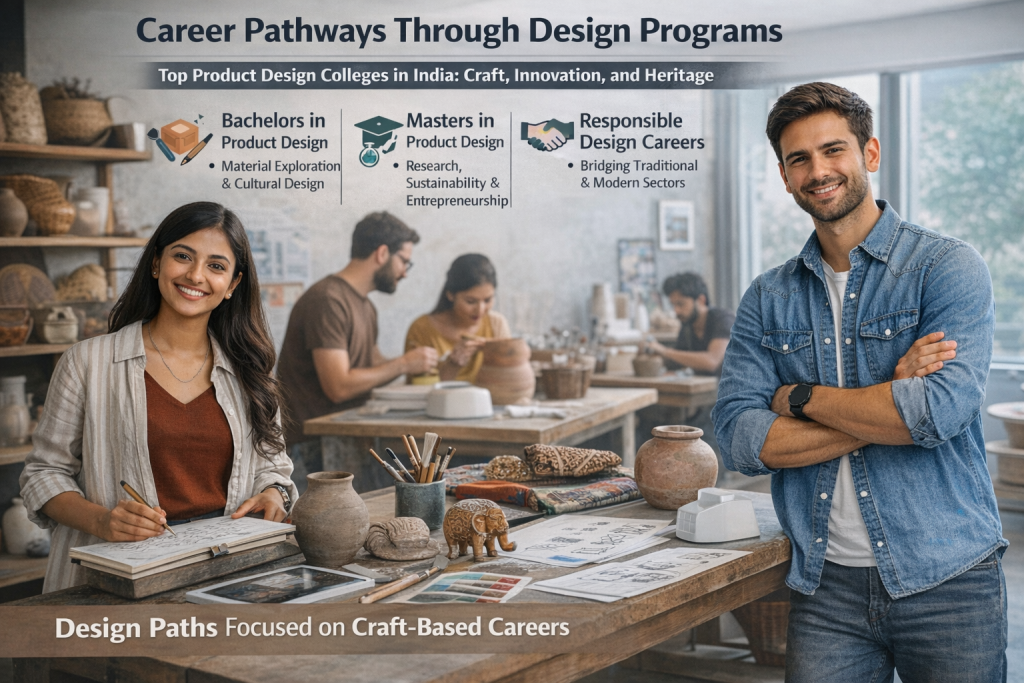
Students interested in craft-led careers often choose top product design colleges in India, where innovation and heritage coexist. Undergraduate programs like bachelors in product design introduce learners to material exploration and cultural design, while advanced programs such as masters in product design focus on research, sustainability, and entrepreneurship. These pathways equip designers to work responsibly within traditional sectors.
Industrial Design and Scalable Craft Solutions
Industrial design contributes by optimizing production while preserving handcrafted value. Through structured industrial design courses, designers learn how to improve efficiency without eroding artisan identity. This balance between craftsmanship and process innovation is essential for the long-term revival of Indian handicrafts, especially in global markets where consistency and quality are key.
Jaipur as a Hub for Craft-Led Design
Jaipur’s recognition as a creative city highlights its importance in India’s design ecosystem. With strong collaboration between artisans, designers, and institutions like ARCH College of Design & Business, the city exemplifies how modernizing traditional art can remain rooted in local culture while appealing to international audiences.
ARCH College of Design & Business: Nurturing Craft-Led Design Innovation
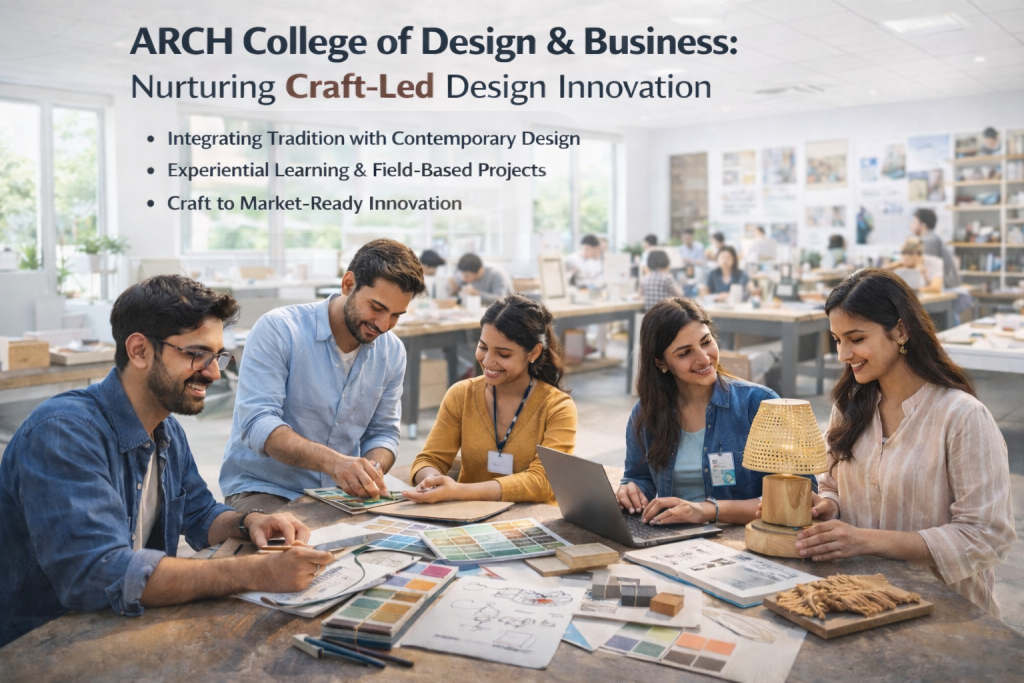
ARCH College of Design & Business, Jaipur, plays a significant role in the revival of Indian handicrafts by integrating traditional knowledge with contemporary design education. Located in Rajasthan—a state globally known for its rich craft heritage—ARCH provides students with direct exposure to artisan communities, indigenous materials, and regional techniques. This immersive learning environment enables young designers to actively participate in modernizing traditional art through structured academic programs and field-based projects.
The institution emphasizes experiential learning, where students collaborate with local craftsmen to reinterpret traditional crafts into modern, market-ready products. Through its undergraduate and postgraduate programs in product design, fashion design, and industrial design, ARCH encourages innovation that respects cultural authenticity while addressing present-day consumer needs. Students pursuing bachelors in product design and masters in product design at ARCH are trained to transform heritage crafts into functional designs aligned with global sustainability standards.
By blending design thinking, entrepreneurship, and craft-based research, ARCH College of Design & Business acts as a bridge between India’s traditional artisans and the modern creative economy. This approach not only supports the livelihoods of craft communities but also ensures that Indian handicrafts evolve organically within contemporary design ecosystems, reinforcing Jaipur’s position as a leading hub for craft-driven design education.
Conclusion: A Sustainable Path Forward
The revival of Indian handicrafts is not about preserving the past in isolation but about evolving it for the future. Young designers, backed by quality design education and cultural awareness, are redefining how traditional art fits into modern lifestyles. By respecting heritage while embracing innovation, they are ensuring that Indian handicrafts remain relevant, sustainable, and globally admired for generations to come.