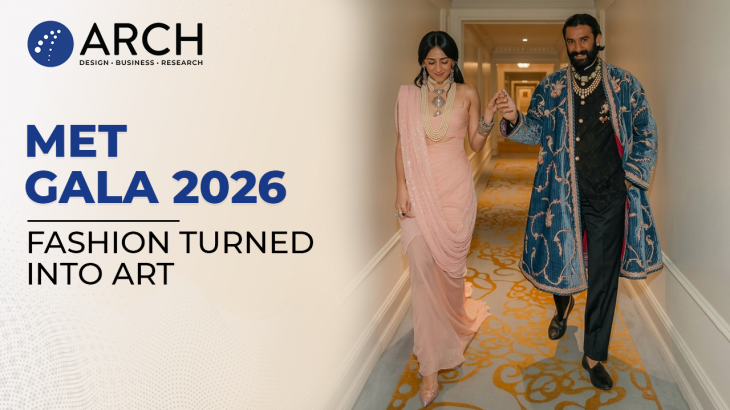
The Met Gala has always been known as one of the most influential events in the global fashion industry. Organised every year at the Metropolitan Museum of Art in New York, the event brings together celebrities, designers, artists, stylists, photographers, and cultural icons on one platform. While many people see it as a glamorous celebrity event, for design students and creative professionals, the Met Gala represents something much deeper, a space where fashion, art, storytelling, performance, and identity come together.
The 2026 Met Gala stood out for its theme, “Fashion Is Art.” This year’s event encouraged designers and celebrities to move beyond trends and create looks that felt emotional, conceptual, and artistic. Instead of focusing only on luxury or aesthetics, the red carpet became a showcase of experimentation, craftsmanship, material exploration, and visual storytelling. For students studying fashion, textiles, communication design, styling, or visual arts, the event became an important example of how creative ideas can be translated into wearable experiences.
Indian Royal Fashion Became a Global Highlight
One of the most culturally significant moments of the evening came from Jaipur royalty. Sawai Padmanabh Singh and Gauravi Kumari brought Indian royal heritage to the global fashion stage through custom looks inspired by Jaipur’s regal history and craftsmanship.
Padmanabh Singh wore a midnight blue velvet Phulghar coat inspired by traditional Rajasthani royal dressing. The garment featured detailed embroidery work that reportedly took hundreds of hours to complete. Styled with polki jewelry, the outfit reflected the richness of Jaipur craftsmanship while still feeling contemporary and refined.
Gauravi Kumari wore a reimagined chiffon sari gown created using a vintage sari belonging to Maharani Gayatri Devi. The look combined pearls, rubies, draped silhouettes, and heritage-inspired detailing to create a modern interpretation of Indian royal fashion.
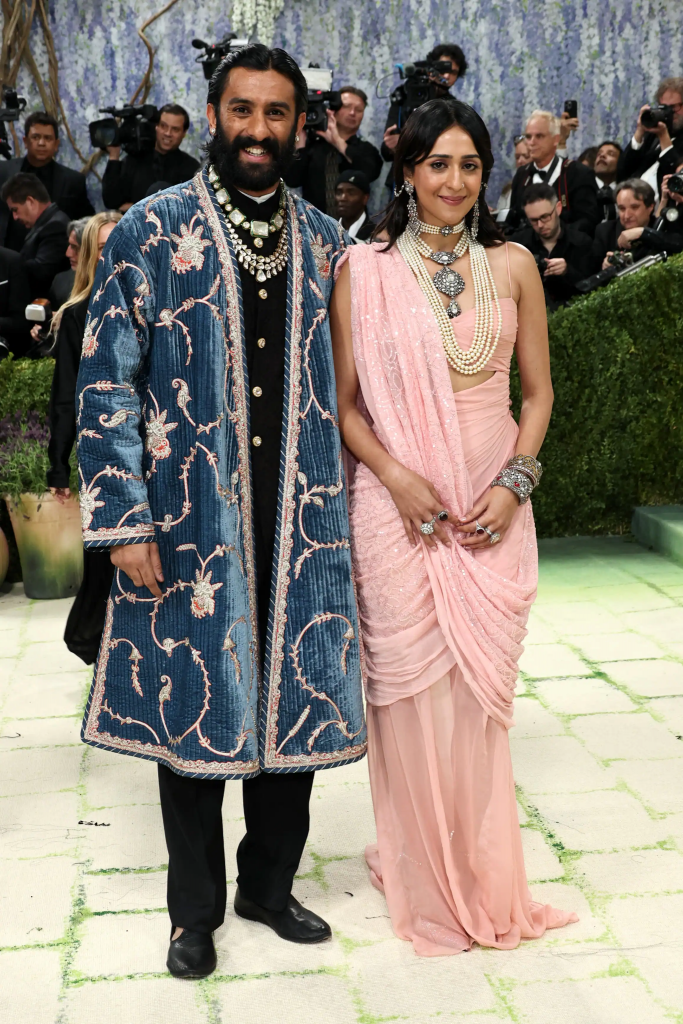
For design students, these looks showed how cultural heritage can be translated into global couture without losing authenticity. The garments celebrated craftsmanship, storytelling, textile history, and regional identity while still fitting perfectly within an international fashion event. The Jaipur-inspired looks also reflected the growing global appreciation for Indian handwork, embroidery, and artisanal luxury within contemporary fashion.
Karan Johar in Manish Malhotra
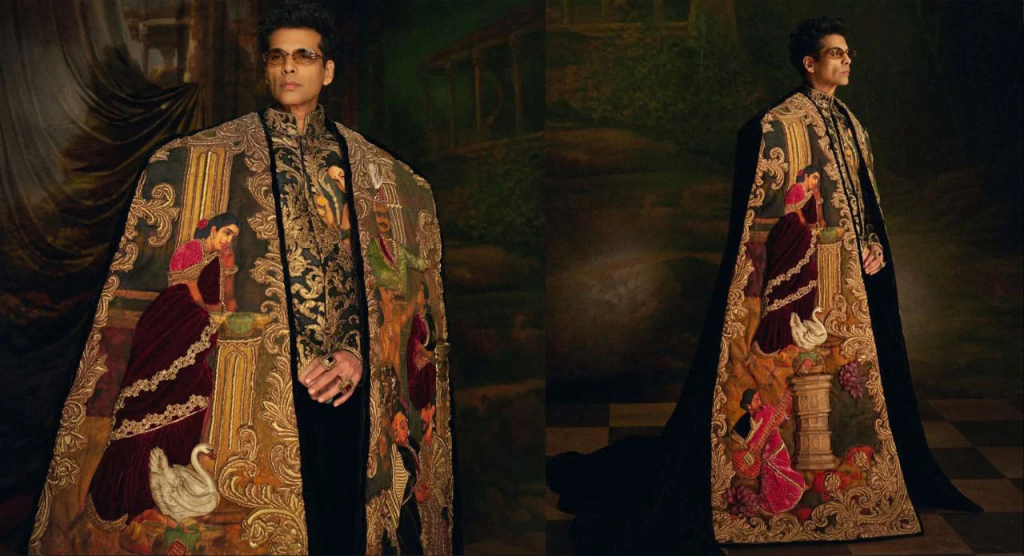
Karan Johar made a strong impression in a custom look by Manish Malhotra, inspired by Raja Ravi Varma’s painting “Hamsa Damayanti.”
The outfit included zardozi embroidery, lotus motifs, and hand-painted details inspired by Indian art traditions. This was one of the most important examples of cultural storytelling on the carpet. The garment showed how heritage art and craftsmanship can be translated into luxury couture without losing authenticity.
Beyoncé in Custom Olivier Rousteing
One of the most talked-about highlights of the evening was Beyoncé’s return to the Met Gala after years away from the event. Wearing a custom metallic couture look by Olivier Rousteing, she embraced futuristic glamour through sharp tailoring, reflective textures, and sculptural structure. The look stood out because it balanced power dressing with artistic fashion.
The metallic surface made the garment appear almost armor-like, while the fitted silhouette created strength and confidence. Beyond the outfit itself, Beyoncé’s arrival alongside Blue Ivy became a viral cultural moment that instantly dominated social media conversations.
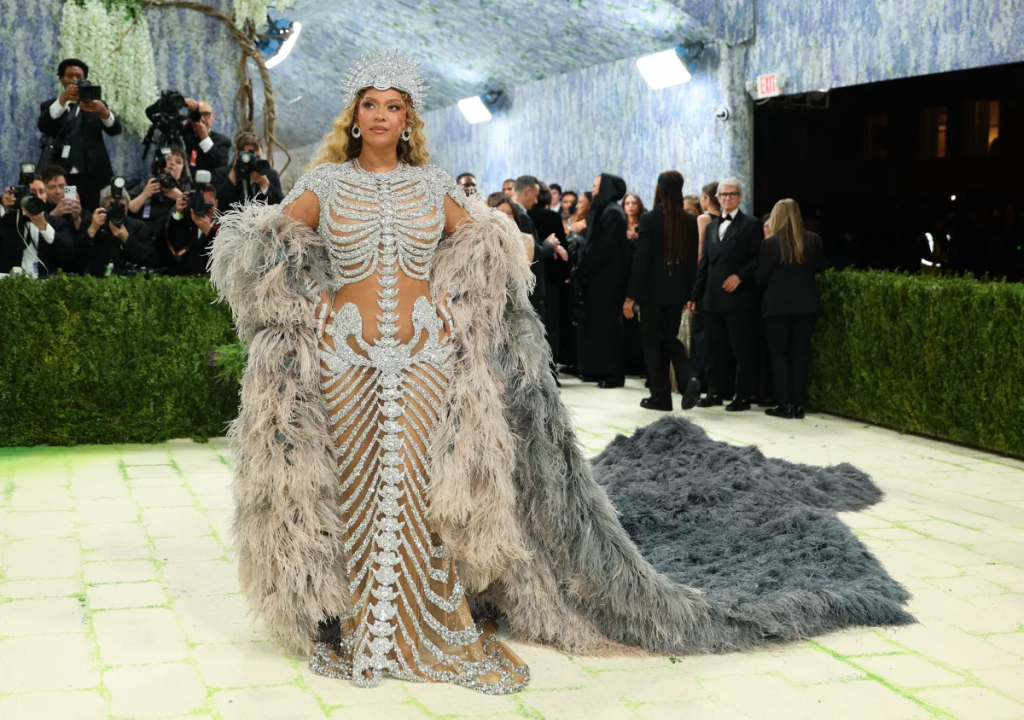
For design students, the look demonstrated how material choice and silhouette construction can completely change the emotional impact of a garment.
Lisa’s Futuristic Ensemble
Singer Lisa arrived at the Met Gala 2026 in one of the night’s most experimental looks, wearing a custom Robert Wun creation titled “The Veil.” The all-white sheer gown featured a mermaid silhouette covered in nearly 67,000 Swarovski crystals and took close to 3,000 hours to complete.
What made the look stand out was the dramatic sculptural concept. The outfit included futuristic 3D arms extending above her shoulders, creating the illusion that invisible hands were lifting her crystal veil. The design was inspired by traditional Thai dance gestures and body movement, turning the garment into a wearable art piece rather than a conventional red carpet gown
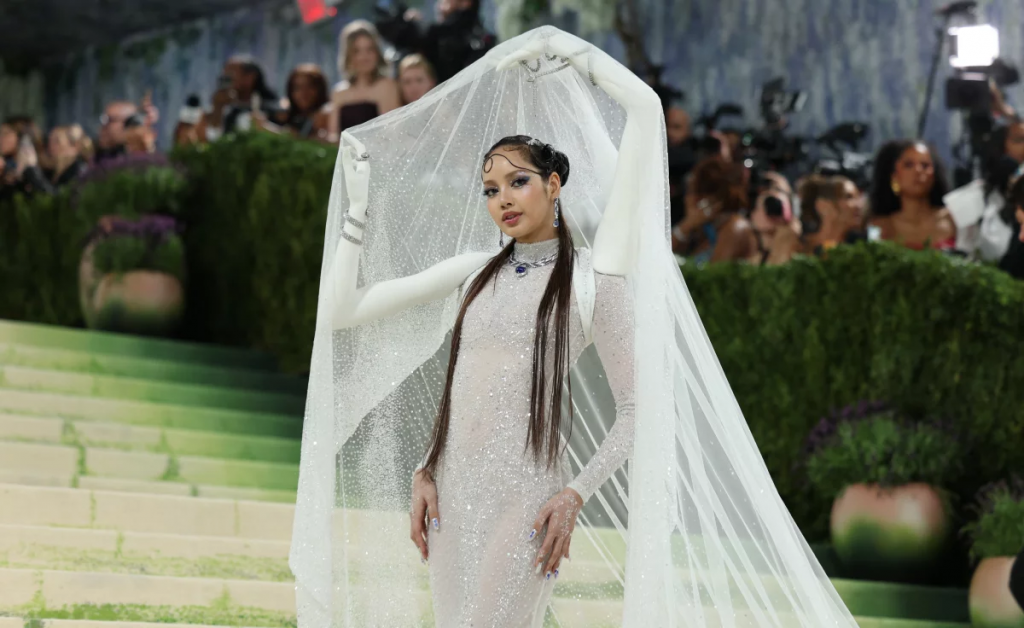
The use of body scanning, sculptural extensions, crystal embellishment, and movement-based inspiration showed how fashion today merges technology, couture craftsmanship, cultural references, and theatrical presentation into one complete visual experience.
Rihanna in Dramatic Couture
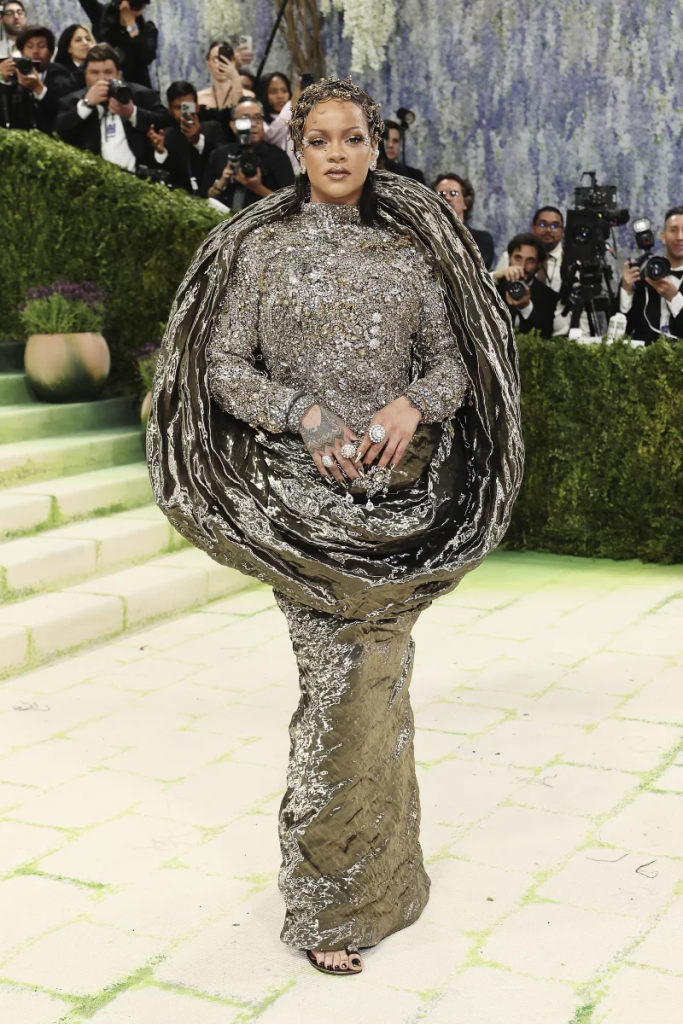
Rihanna once again delivered one of the most talked-about looks of the evening. Her outfit combined exaggerated volume with structured couture elements, creating a balance between theatrical fashion and elegance.
What made Rihanna’s look important was how she used presentation as part of the design itself. The slow staircase walk, styling, and posture all became part of the visual storytelling. This is a reminder that fashion communication is not only about garments, it is also about performance, movement, and audience experience.
The Met Gala 2026 successfully transformed fashion into a living artistic experience. Through bold concepts, sculptural couture, global craftsmanship, and emotionally driven storytelling, the event demonstrated the evolving relationship between art and design in contemporary culture.
For design students, the event offered valuable insights into how creativity functions in the real world, as communication, identity, and cultural expression. More than just a red carpet, the Met Gala became a reminder that design has the power to influence conversations, shape experiences, and leave lasting impressions. To learn more, join ARCH today!