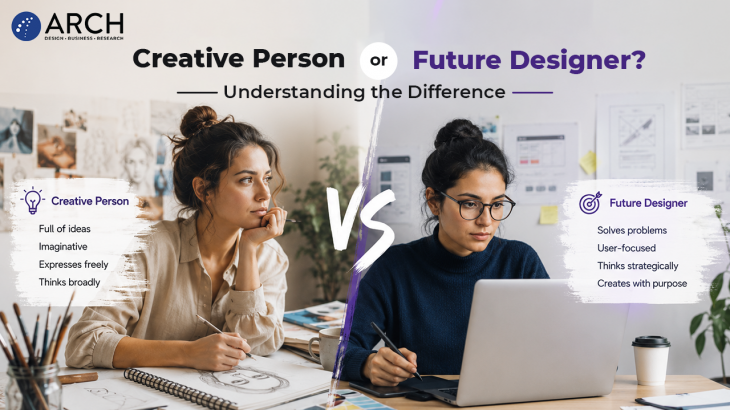
“You’re so creative, you should become a designer.”
It’s a compliment many design students hear before entering design school. After all, creativity is often what draws people toward design in the first place. But as students progress through their education, they discover something surprising: creativity and design are not the same thing. While creativity is an important ingredient in design, being a designer requires much more than having good ideas. Designers must understand people, solve problems, work within constraints, and create solutions that serve a purpose.
If you’re considering a future in design, start here. Before you decide, here are three key differences between being creative and being a designer.
1. Creativity Expresses Ideas, Design Solves Problems
Creativity is often driven by self-expression. It allows people to explore imagination, experiment with concepts, and create something unique. There may be no specific goal beyond expressing an idea or emotion.
Design, however, starts with a problem. Whether it’s a logo, a piece of jewellery, a garment, or an interior space, every design exists to fulfil a need. Designers must think beyond what looks interesting and focus on what works. Take a poster design as an example. A creative individual might produce a visually stunning layout with experimental typography and artistic elements. But if the audience cannot understand the information being communicated, the design has failed its purpose.
The designer’s responsibility is not simply to create something beautiful but to ensure that it communicates effectively. This is why design thinking has become a widely adopted approach across industries. Rather than beginning with aesthetics, designers begin by understanding users, identifying challenges, and developing solutions that address real needs.
In simple terms, creativity asks, “What can I create?” Design asks, “What problem am I solving?”
2. Creativity Thrives on Freedom, Design Works Within Constraints
Many people associate creativity with complete freedom. Artists, writers, and creators often explore ideas without limitations, allowing imagination to guide the process.
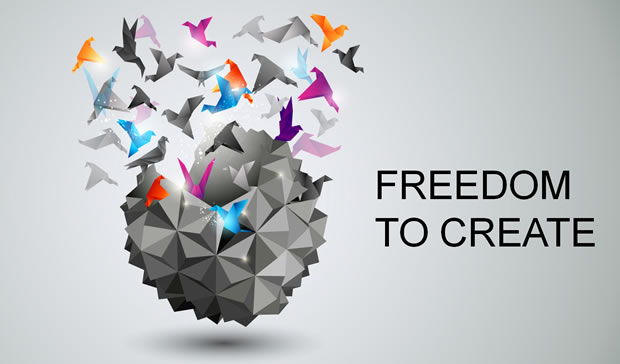
Design rarely works that way. Every design project comes with constraints. There may be budget limitations, material restrictions, manufacturing requirements, client expectations, sustainability goals, or user needs that must be considered. At first, students often view these constraints as obstacles. In reality, they are a fundamental part of the design process.
Consider fashion design. A designer may envision a dramatic garment inspired by a concept or theme. However, the final product must still be wearable, comfortable, producible, and suitable for its intended audience. Similarly, an interior designer may have a creative vision for a space but must also consider factors such as circulation, lighting, safety regulations, and functionality.
The ability to balance creativity with practical requirements is what makes design unique. Interestingly, some of the most innovative solutions emerge because of constraints rather than despite them. Limitations force designers to think strategically, refine their ideas, and find smarter ways to achieve their goals.
While creativity seeks possibilities, design seeks possibilities that can actually work.
3. Creativity Generates Ideas, Design Refines and Tests Them
Having a great idea is exciting. But in design, the first idea is rarely the final solution.
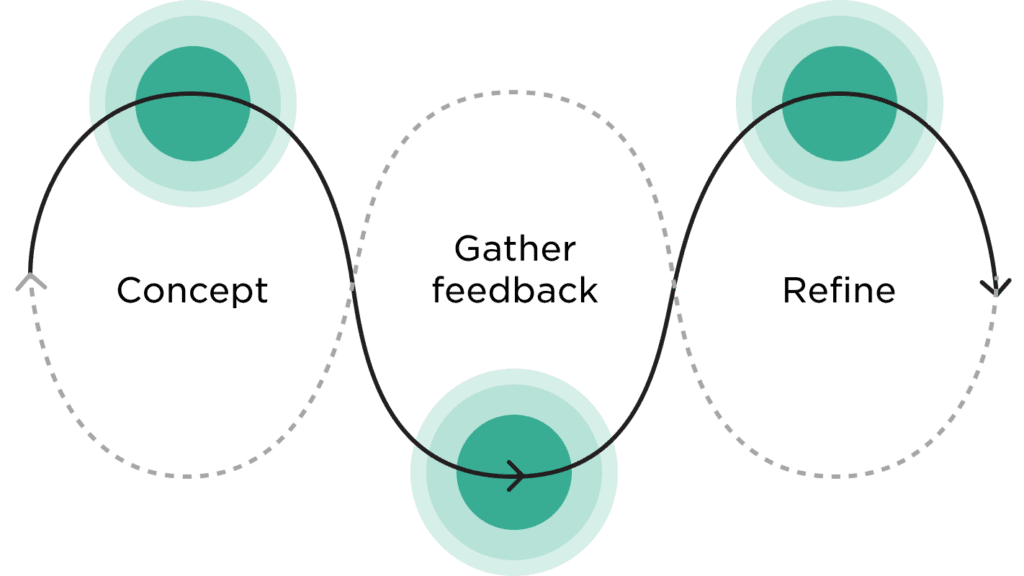
Creative people often focus on generating ideas. Designers must go a step further by evaluating, testing, and improving those ideas. This process is visible across every design discipline. A graphic designer may create multiple versions of a brand identity before arriving at the strongest solution. A jewellery designer may prototype several forms before determining which one balances aesthetics and wearability. An interior designer may develop numerous layouts before finding the one that best serves the user’s needs. Design is inherently iterative.
Research, feedback, prototyping, and revision are all essential parts of the process. Professional designers understand that good design rarely appears fully formed. Instead, it evolves through continuous refinement. This is often one of the biggest adjustments for design students. In school, they may become attached to their initial concepts. In professional practice, they learn that the best solution often emerges after multiple rounds of exploration and feedback.
A creative person may ask, “Is this idea original?” A designer asks, “Does this idea work?”
The Best Designers Are Both
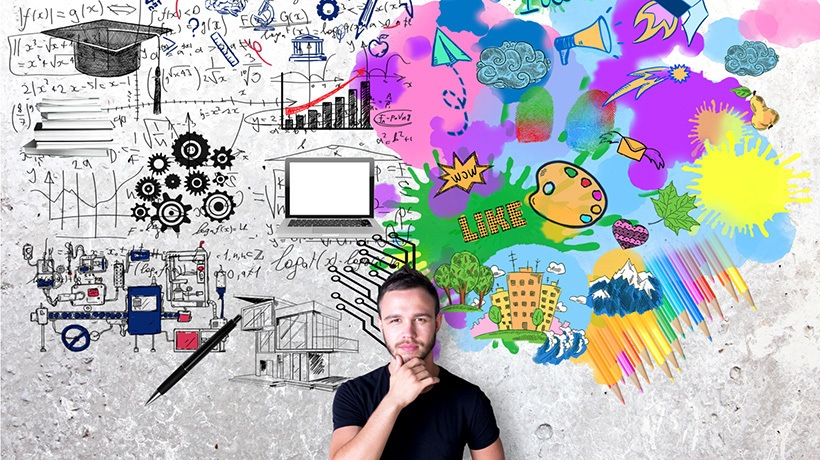
Understanding these differences does not mean creativity and design exist separately. In fact, the most successful designers rely heavily on creativity. Creativity fuels innovation, helps generate new possibilities, and allows designers to challenge conventional thinking. Without creativity, design risks becoming repetitive and predictable. At the same time, creativity alone is not enough. Design transforms creative ideas into solutions that serve people, businesses, and communities. The best designers combine imagination with empathy, aesthetics with functionality, and originality with purpose.
At ARCH, we believe creativity is just the beginning of a successful design career. Our industry-focused programs help students transform ideas into meaningful solutions through hands-on learning, real-world projects, expert mentorship, and exposure to the latest design trends and technologies. Whether your passion lies in fashion, interior, jewellery, graphic design, or emerging creative fields, we equip you with the skills, knowledge, and confidence to thrive in the design industry. Admissions are now open. Take the first step towards turning your creativity into a rewarding career in design.
Apply now and start designing your future.